Tuesday, March 11, 2014

BENEFITS OF THE BREADFRUIT - VIRUTUBISHI NDANI YA SHELISHELI

Posted here on 11 March, 2014. 

from: http://www.naturalfoodbenefits.com/display.asp?CAT=2&ID=121

Breadfruit -   SHELISHELI (Kiswahili)

Breadfruit is unlike any other fruit you've eaten before. That's because breadfruit does not have the look, feel or consistency of a typical fruit, but like its name suggests, looks much like bread. When the breadfruit is ripe it is relatively soft and the inside has a yellow, cream colored flesh that resembles bread. The flesh of the breadfruit is somewhat sweet and has a nice fragrant smell.

Health Benefits of Breadfruit

Not only is breadfruit a rich source of energy, breadfruit also contains significantly high amounts of fiber. According to the American Heart Association fiber decreases bad cholesterol and triglycerides which increases heart attack risks. An increased intake of fiber lowers LDL (bad) cholesterol levels in the body, while elevating HDL (good) cholesterol levels in the body. Breadfruit protects the body against heart disease and heart attacks.

Additionally, the fiber found in breadfruit can help those with diabetes to control the disease. Research shows that fiber can control diabetes by reducing the absorption of glucose from the food we eat.

Another health benefit of breadfruit is that breadfruit helps to make our intestines and bowels work properly. Fiber regulates bowel movements and clears out the buildup of junk from our intestines; eating breadfruit on a regular basis can reduce the risk of developing colon cancer.

Breadfruit benefits the body as it contains favorable amounts of Omega-3 and Omega-6 fatty acids. These essential fatty acids help the body and mind to develop normally. Fatty acids also stimulate skin and hair growth, regulate our metabolism, promote reproduction and stimulate bone health.

In addition to these health benefits breadfruit also contains Vitamin C, thiamin, riboflavin, niacin, iron and phosphorus. Further research is being done to uncover even more health benefits of breadfruit. But in the meantime, you can start eating more breadfruit and take advantage of the many health benefits we know it has now.

Wednesday, March 5, 2014

NATIONAL DEFENCE AUTHORISATION ACT OF USA UNCONSTITUTIONAL?

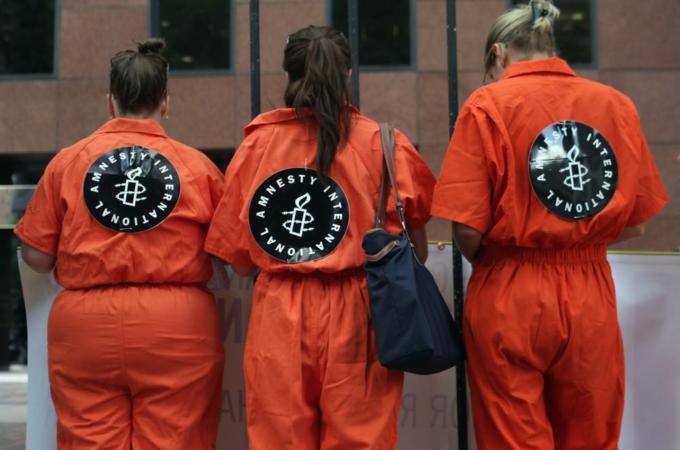
Due process under duress: Detaining citizens under the USA National Defence Authorisation Act  -    (NDAA)  by Jennifer "Tangerine"  Bolen. 

Activists retaliate against the US government by suing them for signing a bill they say goes against the Constitution.
 23 August, 2012.
Under the 2012 NDAA bill, citizens could be detained indefinitely without due process [GALLO/GETTY]
The US government seems determined to have the power to do away with due process and Americans' right to a trial.
I am one of the lead plaintiffs in the civil lawsuit against the National Defense Authorization Act, which gives the president the power to hold any US citizen anywhere for as long as he wants, without charge or trial. In May, following a March hearing, Judge Katherine Forrest issued an injunction against it; this week, in a final hearing in New York City, US government lawyers essentially asserted even more extreme powers - the power to entirely disregard the judge and the law. Indeed, on Monday, August 6, Obama's lawyers filed an appeal to the injunction - a profoundly important development that as of this writing has been scarcely reported.
In the March hearing, the US lawyers had confirmed that yes, the NDAA does give the president the power to lock up people like journalist Chris Hedges and peaceful activists like myself and other plaintiffs. Government attorneys have stated on record that even war correspondents could be locked up indefinitely under the NDAA. Judge Katherine Forrest had ruled for a temporary injunction against an unconstitutional provision in this law - after government attorneys refused to provide assurances to the court that plaintiffs and others would not be indefinitely detained for engaging in first amendment activities. Twice the government has refused to define what it means to be an "associated force", and it claimed the right to refrain from offering any clear definition of this term, or clear boundaries of power under this law. This past week's hearing was even more terrifying: incredibly, in this hearing, Obama's attorneys refused to assure the court, when questioned, that the NDAA's provision - one that permits reporters and others who have not committed crimes to be detained without trial - has not been applied by the US government anywhere in the world - after Judge Forrest's injunction. In other words, they were saying to a US judge that they could not or would not state whether Obama's government had complied with the legal injunction that she had lain down before them.

 US Senate passes 'indefinite detention' bill
To this, Judge Forrest responded that if the provision has indeed been applied, the United States government itself will be in contempt of court. Government attorneys also, in this hearing, again presented no evidence to support their position - and brought forth no witnesses.
I have mixed feelings about suing my government, and in particular, my president, over the National Defense Authorization Act. I voted for Obama. I even had an Obama dance; and I could not stop crying for joy and pride the night he was elected. I defended him for over two years.
But no longer. The US public often ignores his actual failings, and more importantly, entirely ignores how, when it comes to the "war on terror", the US government as a whole has been deceitful, reckless, even murderous. We lost nearly 3,000 people on 9/11. Then we allowed the Bush administration to lie and force us into war with a country that had nothing to do with that terrible day: we killed between several hundred thousand [PDF] and one million Iraqi citizens, caused vast harm to our own soldiers and gutted this nation's treasury for a war that never should have happened. Given these crimes, it is no wonder that Bush, Obama, and the US Congress appear now to be far more interested in enacting misguided, "boogieman in every corner" "war on terror" policies that distract citizens from investigating the truth about what we've done, and what we've become, since 9/11.
I, like many in this fight, am now afraid of my government. We have good reason to be. Due to the NDAA, Chris Hedges, Kai Wargalla, the other plaintiffs and I are squarely in the crosshairs of a "war on terror" that has been an excuse to undermine liberties, trample the US Constitution, destroy mechanisms of accountability and transparency, and cause irreparable harm to millions. Several of my co-plaintiffs know well the harassment and harm that they incur from having dared openly to defy the US government's narrative: court testimony included government subpoenas of private bank records of Icelandic Parliamentarian Birgitta Jonsdottir, Wargalla's account of having been listed as a "terrorist group", and Hedges' concern that he would be included as a "belligerent" in the NDAA's definition of the term - because he interviews members of outlawed groups as a reporter - a concern that the US attorneys refused on the record to allay. Other advocates have had email accounts consistently hacked, and often find their electronic communications corrupted in transmission - some emails vanish altogether - a now-increasing form of pressure that supporters of state surveillance and intervention in the internet often fail to consider.
I've been surprised to find that most people, when I mention that I am suing my president, Leon Panetta, and six members of Congress (four Democrats and four Republicans), thank me - even before I explain what I'm suing them over! And when I do explain the fact that I and my seven co-plaintiffs are suing over a law that suspends due process, threatens first amendment rights and takes away the basic right of every citizen on this planet to not be indefinitely detained without charge or trial, their exuberance shifts, and a deeper gratitude shines through their newly somber demeanours. But this fight has taken a personal toll on many of us, including myself. This winter, as I led the campaign to amend this lawsuit and was working over 80 hours per week to get everything ready, I suddenly ended up in the emergency room, and have subsequently endured six months of a debilitating neurological illness. Thus, I have relied on an international team of volunteers, whose courage and energy has led them successfully to garner support for a lawsuit that is an attempt to restore our most fundamental of liberties.
My government seems to have lost the ability to tell - and, perhaps, even to know - the truth about the Constitution any more. I and many others have not. We are fighting for due process and for the First Amendment; for a country we still believe in; and for a government that is still legally bound to its Constitution.
If that makes us their "enemies", then so be it. As long as they cannot call us "belligerents", lock us up and throw away the key - a power that, incredibly, this past week US government lawyers still asserted is their right to claim. Against such abuses, we will keep fighting.
I am no radical; I am simply a moderate Democrat, suing my out-of-control government. For the sake of people everywhere, I sincerely hope we win.
Jennifer "Tangerine" Bolen is the founder and Executive Director of RevolutionTruth, an organisation dedicated to restoring legitimate democracies in part through increasing access to accurate information. Bolen has a background in integrative medicine, holds a Master's degree in Public Health and Policy and has done the core coursework for a PhD in public affairs and governance

U.S.A. LEGAL SERVICES CORPORATION (LSC) RELEASES FINDINGS ON LEGAL AID

Posted here on 2/10/2012.

National Pro Bono Task Force to Release Findings and Recommendations in Washington, Boston

Monday, October 1, 2012
A Pro Bono Task Force convened by the Legal Services Corporation (LSC) Board of Directors will release its findings this week at events at the U.S. Capitol and Harvard Law School.
The board charged the task force with identifying and recommending innovative ways to enhance pro bono throughout the country. The report presents the findings and recommendations of the task force’s five working groups: Best Practices-Urban, Best Practices-Rural, Obstacles, Technology, and Big Ideas.
“Strengthening pro bono is essential in this time of reduced legal aid funding and rapidly escalating demand,” said LSC Board Chairman John G. Levi. “This report provides a blueprint to reshape pro bono into a more reliable system that will deploy increased and consistent civil legal assistance to the core areas affecting low-income Americans.”
Rep. Frank Wolf (R-VA) who chairs the House Appropriations Subcommittee on Commerce-Justice-Science, and who will speak at the Washington event, also commented on the report.
“I appreciate LSC’s detailed report and recommendations on enhancing pro bono work around the U.S.,” Wolf said.  “For years, I have been advocating for better pro bono coordination between law firms and LSC.  I want to commend this LSC for rising to the occasion to provide critical leadership on this issue.  Pro bono work is essential to meeting the unmet needs of low-income Americans who deserve fair representation.”
The task force, co-chaired by Dean Martha Minow of the Harvard Law School and Harry J.F. Korrell III of Davis Wright Tremaine LLP, included more than 60 distinguished leaders and experts from the judiciary, major corporations, private practice, law schools, the federal government, and the legal aid community. (See a list of task force members.) 
The task force’s recommendations to LSC and its grantees include:
  • Forming a professional association of pro bono coordinators at LSC-funded organizations;
  • Asking Congress to create a new Pro Bono Innovation/Incubation Fund modeled on LSC’s successful Technology Initiatives Grant (TIG) program; and
  • Developing a fellowship program for new graduates and emeritus lawyers designed to build support for civil legal services and pro bono within firms, law schools, and the legal profession as a whole.
The task force’s requests of bar leaders, the judiciary, and others include:
  • Permitting judges to recruit and recognize pro bono attorneys, consistent with their ethical obligations;
  • Allowing lawyers to take on limited-representation matters or unbundle services; and
  • Allowing lawyers to take on pro bono matters in jurisdictions other than those in which they are licensed to practice.
Read a one-page summary of the report. The full report will be available at www.lsc.gov on Tuesday, October 2.
Release Details:
  • The Washington release will take place on Tues. Oct. 2, 5:30 p.m. at the U.S. Capitol Visitors’ Center, Congressional Meeting Room South (CVC-217). Speaking at the event will be: The Honorable Frank Wolf (R-Virginia), Chairman, House Appropriations Subcommittee on Commerce, Justice, Science & Related Agencies; LSC Board Chairman John G. Levi, Sidley Austin LLP; Dean Martha Minow, LSC Board and Harvard Law School; The Honorable David S. Tatel, U.S. Court of Appeals for the District of Columbia Circuit; Lee I. Miller, DLA Piper; Lisa C. Wood, Foley Hoag LLP and ABA Standing Committee on Legal Aid and Indigent Defendants; Harry J.F. Korrell III, Davis Wright Tremaine LLP and LSC Board member; and LSC President James J. Sandman.
  • The Boston release will take place on Wed. Oct. 3, 5:00 p.m. at Harvard Law School, Wasserstein Hall, Milstein West (2nd floor).  A panel of task force members will discuss the report. The panelists are: The Honorable Jim Doyle, Harvard Institute of Politics and former Governor of Wisconsin; Robert Grey, Hunton & Williams LLP and former president of the American Bar Association; Nan Heald, Pine Tree Legal Assistance; Mary Ryan, Nutter McClennen & Fish LLP; and LSC President Sandman.
___
LSC was established by the Congress in 1974 to provide equal access to justice and to ensure the delivery of high-quality civil legal assistance to low-income Americans. The Corporation currently provides funding to 134 independent nonprofit legal aid programs in every state, the District of Columbia and U.S. territories.

U.S.A. PLANNED TO BLOW UP THE MOON WITH A NUCLEAR BOMB IN 1950s !!!

 Posted here on  30/11/2012.

"HUU NDIO WENDAWAZIMU ULIOPITILIZA."

U.S. 'planned to blow up Moon' with nuke during Cold War era to show Soviets might

By ANI | ANI –  Mon, Nov 26, 2012
Washington, Nov. 26 (ANI): The U.S. had planned to blow up the moon with a nuclear bomb in the 1950s.
At the height of the space race, the U.S. considered detonating an atom bomb on the moon as a display of America's Cold War muscle.
The secret project, named 'A Study of Lunar Research Flights' and nicknamed 'Project A119,' however was never carried out.
America's planning included calculations by astronomer Carl Sagan, then a young graduate student, of the behavior of dust and gas generated by the blast, the Daily Mail reports.
According to the report, viewing the nuclear flash from Earth might have intimidated the Soviet Union and boosted U.S. confidence after the launch of Sputnik, physicist Leonard Reiffel said.
Under the scenario, a missile carrying a small nuclear device was to be launched from an undisclosed location and travel 238,000 miles to the moon, where it would be detonated upon impact.
The planners decided it would have to be an atom bomb because a hydrogen bomb would have been too heavy for the missile, the report said.
Military officials apparently abandoned the idea because of the danger to people on Earth in case the mission failed, the report added.
The scientists also registered concerns about contaminating the moon with radioactive material, Reiffel said. (ANI)
Posted here

Blood donation collectors thrown out of Israeli parliament

JERUSALEM Wed Dec 11, 2013 6:00pm EST
 
(Reuters) -
 The speaker of Israel's parliament ordered a blood-collection crew to leave the legislature's premises on Wednesday after it turned down an offer of a blood donation from an Ethiopian-born lawmaker.
Knesset member Pnina Tamano-Shata, 32, wanted to donate blood to a routine visit by an ambulance service but was told by a member of the crew that set criteria disqualified her because she emigrated to Israel from Ethiopia at age three.
Israeli Health Ministry criteria bar people born in most African countries since 1977 from donating blood due to a fear that there is an increased risk they may carry the HIV virus.
Tamano-Shata said ministry guidelines determine that Ethiopian-born Jews who emigrated to Israel when they were over two years old are ineligible to be blood donors.
"Clearly, my blood samples are checked, there has never been any cause for concern ... nevertheless, there is an attitude of not bothering to scrutinize (blood donations of Ethiopian immigrants) even though they know that it humiliates an entire community," she told Channel 10 television.
Israeli President Shimon Peres expressed disgust at the incident, saying: "There must not be any differentiation between Israeli people's blood. All Israel's citizens are equal."
Health Minister Yael German described the incident as "a disgrace" and said she would order a public consultation to change the guidelines. A parliamentary committee is set to discuss the incident next week.
The World Health Organization said on its website that surveillance in Ethiopia as of September showed the adult rate of AIDs is estimated at 6.6 percent among a total population of over 90 million people.
In 1996, thousands from Israel's Ethiopian community besieged the office of then-Prime Minister Peres in a violent protest at what they called Israeli racism against blacks.
They demonstrated after discovering that the national blood bank had a policy of throwing out their donations for fear of AIDS. New guidelines were subsequently made public but these still prevent Ethiopian Jews from giving blood.
Israel's community of Ethiopian Jews numbers some 100,000. They moved to Israel after chief rabbis determined in 1973 that the community had biblical roots.
Since 1996, fewer than 10 Jews of Ethiopian origin have made it into Israel's parliament as members if various factions. Some from the community have attained officer rank in the military but complaints of discrimination in schooling and housing are common.
(Editing by Philip Barbara)
Ubuntu and the Emancipation of Humans Everywhere

By Horace Campbell

December 12, 2013 "Information Clearing House - "Counterpunch" - Beijing - On Thursday December 5, 2013 the people of South Africa lost one of the foremost freedom fighters and revolutionary who made his mark on humans everywhere. Nelson Rolihlahla Mandela was born in South Africa in 1918 and matured as Africans in South Africa rose to the challenges posed by the most brutal social and economic system of that moment, the system called apartheid.  Mandela has now joined the ancestors and he has left his mark beside those great humans (such as Mahatmas Gandhi, Martin Luther King Jr, Rosa Parks, Umm Kulthum, Che Guevara and Rosa Luxemburg) whose greatness emerged from the movements that created them. The forms of struggle that emerged from South Africa inspired the refinement of the philosophy of Ubuntu. This is a philosophy that says one’s humanity is being enriched by another’s and that as humans we are linked to a wider universe and spiritual world. Mandela had said clearly of Ubuntu, “The spirit of Ubuntu – that profound Africa sense that we are human beings only through the humanity of other human beings – is not a parochial phenomenon, but has added globally to our common search for a better world.”

The philosophy of Ubuntu challenged the ideals of individualism, greed, unhealthy competition, obscene self-enrichment and those destructive forms of human association that have brought the planet to the brink of extinction. When the movement elevated Nelson Mandela to the position as President of a politically free South Africa in 1994, after 27 years of incarceration, the political leadership of South Africa sought to give practical meaning to the philosophy of Ubuntu by establishing a Truth and Reconciliation Commission (TRC). In all parts of the world, the international media remember Mandela and his contributions to peace and reconciliation but the same corporate media seeks to confuse the youth by marketing  Mandela as an unusual individual who performed the ‘miracle’ of ending apartheid. In the process of the wall to wall media coverage of the celebration of the life of Nelson Mandela, it is important that the voice of Africa is clear on the meaning of Mandela. Mandela was against racism and the dehumanizing social system that created hierarchies.
As peace activists it is vital that we remember Mandela as a defender of peace and social justice and the fact that he was an extraordinary human being. What is important to remember is a product of a social movement; the extraordinary circumstances of the oppression of apartheid created this Mandela. Mandela joined a social movement, the anti-apartheid movement and for a moment in history, he became the symbol of the struggle against war and apartheid. His freedom came from the sacrifices of millions, especially the youth of Soweto and the workers from the Mass Democratic Movement who laid down a marker for the new tactics of revolution. While he was the President of South Africa, Mandela worked for peace in Burundi and Central Africa and worked hard to end the western manipulation of who can be branded as a terrorist.
Those who branded Mandela as a terrorist are seeking to program the minds of the youth to see Mandela as some sort of visionary leader “dropped from heaven” without links to real struggles for peace. Mandela was very clear that his life was linked to the collective struggles of humans everywhere, and when he was released in February 1990 he said, “Amandla, Amandla … I greet you all in the name of peace, democracy and freedom for all. I stand here before you not as a prophet but as a humble servant of you, the people.”
This media coverage of Nelson Mandela challenges contemporary freedom fighters to contemplate new tactics, new tools of struggles and new networks for peace in order to complete the tasks of ending global apartheid. The African National Congress in government had been trapped by its inheritance of the social capital of the apartheid state. New forms of organization and new ideas will be needed as humans gird themselves to fight against the nefarious forms of racism, exclusion and oppression that have been refined by global capital as unbridled capitalism seeks to turn our youths into mindless consumers. It is up to the youth to gird themselves for the new phase of internationalism and peace activism so that we can create the conditions for the inspiration presented by the life of Nelson Mandela to be grasped in all corners of the globe. Mandela lived a full life and we want to add to the tributes as we celebrate his life of struggle.
The society that created Nelson Mandela
As soon as it became clear that the most obscene forms of white supremacy could not survive after the massive resistance of peoples in all parts of the globe, international news programmers began to present Nelson Mandela who, as a visionary leader, single handedly ended apartheid. Books, films, documentaries, blogs and other mainstream media seek to present the changes in South Africa without reference to the reality that Nelson Mandela always represented a liberation movement. Inevitably, as the movement mobilized around the release of Nelson Mandela when he had been incarcerated for 27 years, Mandela became a symbol of the anti-apartheid struggle. As the struggle matured in the final phase after his release from jail on February 11, 1990 the myth making was developed as part of an election campaign. It is this mythmaking that ensured the positive and the negative in the representation of Nelson Mandela to a generation that was not yet born when the liberation struggles were at the peak.
When Mandela was born in the village of Qunu, in the province that was called Cape Province, the Union of South Africa had been formed eight years earlier. The Union government had celebrated the crushing of the Bambata rebellions and in the face of the failure of open military rebellions by regional military forces, the African National Congress had been formed in 1912. Mandela grew up in South Africa in the turbulent period of the 1930’s capitalist depression. It was in the midst of this depression when the capitalists of South Africa refined the repression of black mine workers and inculcated in white workers the idea that they (whites) were not workers but from a superior race. With the villages of South Africa and the wider region of Southern Africa providing cheap labour for the mines, mining capital reaped super profits at a moment when the instability in the international monetary system required a steady supply of gold from South Africa.
The royal families of the pre –Union society could not escape the effects of the deformities of segregation and dehumanization. Missionaries were deployed to teach sons of chiefs and it was from one of the missionaries that Mandela received the name Nelson because the missionaries had difficulties saying Rolihlahla. After this missionary education Mandela was sent to Fort Hare University and it was in this University where the other famous anti-apartheid and anti-colonial stalwarts were groomed. Z. K. Matthews, Govan Mbeki, Oliver Tambo, Joshua Nkomo, Walter Sisulu, Robert Sobukwe, Desmond Tutu and Robert Mugabe were some of the notable students in the forties at this University. As an activist he was expelled from Fort Hare and he went on to study Law at the University of Witwatersrand.
Nelson Mandela joined the African National Congress (ANC) in 1942 and in 1944, along with Walter Sisulu, Robert Sobukwe, and Oliver Tambo, they formed the Youth wing of the ANC. This youth wing joined the hundreds of anti-colonial movements all over the world and when the repressive legal structures of apartheid were formalised to support the social divisions, the peoples responded with a Freedom Charter. The Sharpeville massacres of March 21, 1960 foreclosed all possibilities of a peaceful non –violent opposition to apartheid and in 1962 Mandela was dispatched to the independent states of Africa to gain support for the armed wing of the ANC, Umkhonto we Sizwe (abbreviated as MK, translated as “Spear of the Nation). Mandela was one of the co-founders of MK and he received training in many African countries before he returned to South Africa. Mandela participated in the debates about unity and struggle that were at that time raging in the Pan African Freedom Movement for East and Central Africa (PAFMECA).
Self Organization of the Youth of Soweto
South West Johannesburg (Soweto) was one of those dormitory towns that were a reservoir of cheap labour for the rich and middle class whites in the suburbs of Johannesburg. Mandela was arrested in 1962 for planning “sabotage” of the government and was branded a terrorist by the South African state.  The US military and intelligence agencies worked hand in glove with the apartheid military to crush opposition from the African majority.  From 1973 the workers of Durban had given notice that there would be new organizational forms to oppose apartheid and the youth of Soweto followed with the massive uprisings of 1976. These rebellions are central to the kind of politics that developed in the period when Mandela was incarcerated after the Rivonia trials in 1964.
The sacrifices of the youth and their determination had created new alliances and these alliances matured in the Mass Democratic Movement and the United Democratic Front (UDF). While Nelson Mandela as a lawyer had been groomed to focus on the legal questions of the apartheid laws, the social questions of health, education, housing, police brutality placed the fight against apartheid on a new terrain as the ANC worked to remain alive in the heat of the conservative push of Ronald Reagan and Margaret Thatcher.  The formation of the UDF had provided for an alternative source of political power at the grassroots and strengthened the capacity of the resistance to transform their conception of the long term struggles to create an alternative to the social system.
Forward planers for the investors in the Johannesburg Stock Exchange were sufficiently alarmed when the rebellions of the youth rendered South Africa ungovernable and apartheid unworkable. After the killing of Steve Biko, the planners sought out the brightest from among these rebellious youth to send them to be trained as future leaders in North American and European Universities. Those educated in the schools of the West became the experts after return to South Africa to be at the forefront of the negotiations for the form of society to be built after apartheid. Free Mandela Committees were an integral of the global antiapartheid struggles. In response to these local, regional and international alliances to end apartheid the South African Defence forces (SADF) spread death and destruction in the townships and across the region of Southern Africa. The terrorism of apartheid along with the killing of more than 2 million in the neighboring states did not break the will of the people. If anything, international solidarity intensified with the support of the Cubans assisting the Angolans to fight the apartheid army at Cuito Cuanavale.
The importance of Cuito Cuanavale
One of the many tasks of western propaganda organs has been to downplay the sacrifices of the peoples of the region of Southern Africa for the independence of Namibia 1990, the release of Nelson Mandela, and the negotiations to end apartheid. The epic battles at Cuito Cuanavale between October 1987 and June 1988 changed the history of Africa. The SADF had invaded Angola with the plan to impose Jonas Savimbi in Luanda and to defeat the freedom fighters from Namibia of the South West Africa People’s Organization (SWAPO). The apartheid army became bogged down at the crossroads of two rivers in Southern Angola. In order to intimidate the peoples of Africa the SADF had manufactured tactical nuclear weapons with the assistance of the Israeli state. When the South African army became bogged down the President of South Africa, P.W.Botha flew to the frontlines of the battles in Angola to broker a debate between the generals on whether South Africa should deploy and use its nuclear capabilities.
The international isolation of the white racist regime meant that there was no sympathy for this option, even from the conservative Reagan Administration. The racist army had to fight against a confident Angolan military with Cuban reinforcements. After nine months fighting the SADF was roundly defeated with the remnants of the SADF retreating on foot to Northern Namibia. In order to rescue the SADF so that the military would not be routed as the French army was routed at Dien Bien Phu in 1954, in stepped the US Assistant Secretary of State for African Affairs, Chester Crocker to broker the decent withdrawal of the SADF from Namibia.  This battle was episodic and Fidel Castro rightly asserted that the History of Africa will be written as that of before Cuito Cuanavale and after Cuito Cuanavale.
Nelson Mandela and the South African struggles after Cuito Cuanavale
Nelson Mandela’s walk of Freedom out of incarceration in 1990 had represented a major step in the peoples of the world   for a new system after apartheid. However, those who owned the banks, the mines, the insurance companies and the land were planning for a post-apartheid society where the capital remained in the hands of the white minority along with new black allies. International capital had grasped the full implications of black partners in societies such as Kenya, Zimbabwe, Cameroons, Algeria and Nigeria. Hence even while the negotiations were on going for the New Society in The Convention for a Democratic South Africa (CODESA,) the more far sighted elements such as the Oppenheimer family of Anglo-American Corporation worked to support those within the movement that believed that the end of Apartheid was for the development of a class of black entrepreneurs under Black Economic Empowerment (BEE). The nature of the inequalities in South Africa today demonstrates the success of the plan to create black allies. Cyril Ramaphosa is the poster child of a militant trade union leader of the anti-apartheid era who became a mining magnate after apartheid, exploiting the very workers he had vowed to defend.  The image of Cyril Ramaphosa who had escorted Nelson Mandela out of Prison in 1990 operating and multibillionaires was one sign of the class formation in South Africa.  In 2012, the political leaders of the ANC oversaw a government that shot 34 Marikana workers who were striking for better conditions at the Platinum Mines in South Africa. It was a proper clarification of the politics of transformation when Ramaphosa, a multibillionaire, emerged as the spokesperson for the owners of the Platinum Mines in rejecting the demands of the workers for better working conditions and better wages. The ANC and its tripartite alliance of the Communist Party, the Congress of South African Trade Unions (COSATU) had fashioned a theoretical basis for the enrichment of a few by arguing that before South Africa could enter the phase of transformation beyond capitalism there had to be the development of the productive forces. Nelson Mandela was caught in 1994 in the midst of the alliance and within five years sought to extricate himself by stepping down as President of South Africa in 1999 after one term.
Ubuntu in practice, the Truth and Reconciliation Commission (TRC)
One of the sterling contributions of the South African struggle was to be able to clarify the differences between restorative justice and retributive justice, based on Ubuntu. In fact, Mandela not only embraced Ubuntu, under his political leadership, there was an attempt to bring the ideas of Ubuntu from its philosophical level to the level of practical politics in ways that helped avert bloodbath to form a better society, however imperfect. And this was in part done through the establishment of a Truth and Reconciliation Commission.
In the three years after the release of Mandela, the international media was predicting a bloodbath in South Africa if Blacks were to emerge victorious from the first democratic elections in 1994. Those with strategic control over the means of violence sought to make this bloodbath a reality right up to the moment when Mandela was inaugurated in May 1994 as the first Black President of a Democratic South Africa. One year after Mandela became President, the Parliament of South Africa established the Promotion of National Unity and Reconciliation Act, No. 34 of 1995. This became the legal framework for the establishment of the Truth and Reconciliation Commission and Mandela threw his international weight behind the process of Reconciliation. While the TRC was holding sessions under the Chairperson Desmond Tutu, Mandela made a number of public gestures to demonstrate the fact that he supported full reconciliation between the oppressed blacks and the oppressors. Of the two most public of these gestures were the visit to have tea with Mrs Betsie Verwoerd at Oriana in 1995 and donning the jersey of the segregated South African rugby team in the World Cup in South Africa.
Mrs Verwoerd, the widow of the architect of the most brutal apartheid structures had retreated to the town of Orania in the Cape seeking to establish an all-white town because the whites could not live under a black political leadership. The extreme Afrikaners around Mrs Verwoerd had chosen the small community to set up a laager and the whites in the town did not want any black around, not even black servants. These whites did not recognize Mandela as the legitimate President of a Free South Africa. Mandela took the bold step of travelling to this all white town of Orania to demonstrate to Mrs Verwoerd that the new South Africa was based on forgiveness and willingness to share, core principles of Ubuntu. This gesture was relayed all over the world by the local and international media as Mandela sat down to have tea with the people who were responsible for arresting and incarcerating him. Two months earlier Mandela had orchestrated another public act by going to the Rugby World Cup Match and putting on the jersey of the South African team. Sporting activities had been one of the strongest bases for segregation in the society and in all areas of sporting activity Mandela inspired South Africa to rise above the structural violence that had become part and parcel of South Africa.
At the legal level, South Africa’s post-apartheid constitution is one of the most progressive in the world, and it draws on Ubuntu to enshrine equal constitutional rights for all – black, white, colored, women, youths, elderly people and same-gender-loving persons.
This effort at Reconciliation at the legal level and at the public level went side by side as the TRC started hearings in Cape Town in 1996. The mandate of the commission had been to bear witness to, record and in some cases grant amnesty to the perpetrators of crimes relating to human rights violations, as well as reparation and rehabilitation. Witnesses who were identified as victims of gross human rights violations were invited to give statements about their experiences, and some were selected for public hearings. Perpetrators of violence could also give testimony and request amnesty from both civil and criminal prosecution. Witnesses who were identified as victims of gross human rights violations were invited to give statements about their experiences, and some were selected for public hearings. Perpetrators of violence could also give testimony and request amnesty from both civil and criminal prosecution.
A new politics was being developed in the context of seeking restorative justice beyond the Nuremberg Model of winners’ court. The Healing power of the process was manifest in the rituals that emanated from victims and oppressors, creating a space that could be the basis of holding the society together. This ritual of the TRC with the spiritual underpinnings of forgiveness and healing was a powerful antidote to the three hundred years of white racist oppression. Malidoma Some had written a book on the Healing Wisdom of Africa: Finding Life Purpose Through Nature, Ritual, and Community.  It was in the TRC where one saw some of the ideas being worked out. During the Hearings of the TRC there were public hearings as the narratives of perpetrators and victims moved in  a constant motion across time (from present to past and present to future) and space (spiritual, social, physical, emotional) in a movement that may be called recursive.
Here was a profound moment in the history of South Africa as the African people offered a crucible for healing the society. Nelson Mandela and Desmond Tutu will go down in history as individuals who opened up the possibilities for another form of society. This healing process offered by the TRC, despite its imperfections, placed Ubuntu on the philosophical map breaking the ideation baggage of individualism, greed, competition and revenge.
If the Black people and the oppressed majority were willing to turn a corner, international capital was not. Plans for the Reconstruction and transformation of South Africa were shelved in the face of the timidity of the political leadership in calling for the cancellation of the apartheid incurred debt. The repercussions of managing the neo-liberal programe of international capital cut off the top leadership of the ANC from the rank and file. Questions of the social reconstruction after apartheid had to be shelved until new emancipatory formations arise in South Africa. International capita took the lessons of South Africa to heart and sought to promote a neo-liberal agenda where a small minority collaborated with international capital in the new template for the exploitation of the majority. This form of class rule came to be understood as the globalization of apartheid without its racial baggage.
Mandela and Ubuntu overseas
Mandela was opposed to the Western designation of states as sponsoring terrorism and openly supported Fidel Castro of Cuba, Yasser Arafat of the Palestine Liberation Organization (PLO) the Saharwi Arab Democratic Republic and the political leadership in Libya. As one who had been placed on the US list of international terrorist, Mandela in 1992 had made a clear statement about the standoff between Libya and the West over the downing of the 1998 Pan American Airways flight 103. This plane had exploded over Lockerbie Scotland and the West accused two Libyans of planting the bomb. This is despite the fact that at the precise moment of the bomb, western media had blamed Iran for planting the bomb.
In 1998 Mandela travelled to Libya three times within one week to mediate between the British government and the Libyan authorities. After travelling back and forth between the western leaders and Muammar Gaddafi the head of the Libyan state, Mandela struck a deal where Gaddafi handed over the two suspects in return for the lifting of international sanctions against Libya. Gaddafi accepted the offer of Nelson Mandela and offered to pay US $2.7 billion , approximately $10 million for each of the victim’s families. Gaddafi went further to open up his economy to western oil companies and in 2004 dumped his plans for the acquisition of Chemical and Biological weapons. Despite this opening and the intense investments of the West, International capital was not satisfied and in 2011 orchestrated the invasion, bombing and destruction of Libya under the banner of Responsibility to Protect. Gaddafi was executed and humiliated as the West sought to roll back all ideas of African Unification and Liberation.
Mandela as a Peace maker
After Nelson Mandela was rid of the responsibility of managing the structures of the apartheid economy, he became even more outspoken against inequalities. He was assertive on the question of the need for health for all and the provision of retroviral medicine for those affected by HIV AIDS even while other leaders of the ANC were equivocal over the response of the government of South Africa to this pandemic. Outside of South Africa Mandela shamed the leaders of the Organization of African Unity (OAU) who had stood by while the fastest genocide unfolded in Rwanda in 1994. After the passing of Julius Nyerere in 1999, Nelson Mandela engaged the peace process in Burundi and threw his considerable international stature behind a tough process of negotiations to end the decades of warfare in Burundi.
Mandela was opposed to the deployment of US military personnel in Africa and he spoke out firmly against the Africa Crisis Response Initiative (ACRI), the forerunner to the current Africa Command. When George W. Bush started his buildup for the war against the peoples of Iraq Mandela offered himself up as a peace maker to be a human shield against US bombs. In an interview with Newsweek Magazine in 2002 prior to the invasion, Mandela called the USA a threat to the peace of the world.
“If you look at those matters, you will come to the conclusion that the attitude of the United States of America is a threat to world peace. Because what [America] is saying is that if you are afraid of a veto in the Security Council, you can go outside and take action and violate the sovereignty of other countries. That is the message they are sending to the world. That must be condemned in the strongest terms.” As a peace activist, Mandela took issues personal with George Bush over the decision to invade Iraq. Addressing the International Women’s Forum in Johannesburg in 2003, a visibly furious Mandela stated unequivocally: “What I am condemning is that one power, with a president [George Bush] who has no foresight, who cannot think properly, is now wanting to plunge the world into a holocaust. … If there is a country that has committed unspeakable atrocities in the world, it is the United States of America. They don’t care.”
The legacies of Nelson Mandela
The differing legacies of the political leadership of Nelson Mandela were on full display at the massive memorial event held in Soweto on December 10, 2013. There the mass of people expressed themselves in the admiration and warmth of Nelson Mandela and at the same time expressing their opposition to the corruption of the top leadership of the ANC. The people booed the current leader of the ANC,  Jacob Zuma, every time his face appeared on the giant TV screens in the stadium. Mandela had always remarked that he was a disciplined member of the ANC and his membership of the organization pointed to the differences between the promises of the anti-apartheid struggles and the realities of the enrichment of a new class of African exploiters. It was appropriate that this celebration of the life of Mandela marked a new stage for the corrupt leadership of the ANC.
In the period of the anti-apartheid struggles, funeral ceremonies were occasions for mass mobilization and education The entire proceedings played out before over 90 heads of states and governments reflected the new relationship between the ANC and the mass of the poor.  Despite the fact that this occasion represented a huge logistical challenge, one could negatively compare the planning of the leadership on this occasion with the World Cup in 2010. Hence, for one of the most important public events in the history of South Arica, for most of the time the stadium was half empty.  The ANC did not provide transportation to the stadium as promised. The poor travelled from near and far by train only to find that there were no buses to take them up to the stadium. Even those who braved the downpour  of rain to  make it to the stadium was not allowed to celebrate the way South Africans are used to celebrate at such events. Instead they were expected to sit and listen like little children. At such events people would sing and dance. In fact, before each speaker someone would raise a song and people would follow and sing until the speaker was ready to speak. Even Zuma would start a song and dance before he spoke.  Jacob Zuma, the leadership and Cyril Ramaphosa wanted the people to forget the kind of mass mobilization that was engineered to end apartheid. They are afraid that this mass mobilization will sweep the billionaires from power.
The political leadership of Nelson Mandela in the anti-apartheid struggle had both focused attention on him as an individual and released the energies of various groups whose task was to clarify the details of the real meaning of transformation beyond apartheid.  In this and in many other ways, Nelson Mandela symbolized the dialectic of resistance and transformation. His own life has mirrored the way in which a social movement shaped individuals. Hence, the youth who are hearing the tributes to Mandela are faced with the contradiction between focusing on great leaders and the kind of media coverage that is geared towards the depoliticizaion of the youth.  Richard Falk summed up very lucidly the place of Mandela for humans everywhere when he wrote,
“It was above all Mandela’s spiritual presence that created such a strong impression of moral radiance on the part of all of us fortunate enough to be in the room. I was reinforced in my guiding belief that political greatness presupposes a spiritual orientation toward the meaning of life, not necessarily expressed by way of a formal religious commitment, but always implies living with an unconditional dedication to values and faith that transcend the practical, the immediate, and the material.”
In his earthly life, Mandela could not escape this tension between the spiritual and the material.  The spiritual energies of the peoples had been unleashed to fashion a non-racial democracy. Liberal conception of democracy could not understand this attempt to transcend the ideas of the Western Enlightenment, which itself built on human hierarchies that carved a supreme space for the enlightened white man. Nelson Mandela had been reared in these ideas at Fort Hare and as a lawyer but the struggles elevated him to be special human beings among revolutionaries. The world salutes Nelson Mandela and we join with those who are sending tributes to his family.
We will also add that the people should not mourn but organize for the next round of struggle.
Horace G .Campbell, a veteran Pan Africanist is a Visiting Professor in the School of International Relations, Tsinghua University, Beijing.  He is the author of Global NATO and the Catastrophic Failure in Libya, Monthly Review Press, 2013. 
 From the ClearingHouse:  The News you will never find on CNN.

Ubuntu and the Emancipation of Humans Everywhere

By Horace Campbell

December 12, 2013 "Information Clearing House - "Counterpunch" - Beijing - On Thursday December 5, 2013 the people of South Africa lost one of the foremost freedom fighters and revolutionary who made his mark on humans everywhere. Nelson Rolihlahla Mandela was born in South Africa in 1918 and matured as Africans in South Africa rose to the challenges posed by the most brutal social and economic system of that moment, the system called apartheid.  Mandela has now joined the ancestors and he has left his mark beside those great humans (such as Mahatmas Gandhi, Martin Luther King Jr, Rosa Parks, Umm Kulthum, Che Guevara and Rosa Luxemburg) whose greatness emerged from the movements that created them. The forms of struggle that emerged from South Africa inspired the refinement of the philosophy of Ubuntu. This is a philosophy that says one’s humanity is being enriched by another’s and that as humans we are linked to a wider universe and spiritual world. Mandela had said clearly of Ubuntu, “The spirit of Ubuntu – that profound Africa sense that we are human beings only through the humanity of other human beings – is not a parochial phenomenon, but has added globally to our common search for a better world.”

The philosophy of Ubuntu challenged the ideals of individualism, greed, unhealthy competition, obscene self-enrichment and those destructive forms of human association that have brought the planet to the brink of extinction. When the movement elevated Nelson Mandela to the position as President of a politically free South Africa in 1994, after 27 years of incarceration, the political leadership of South Africa sought to give practical meaning to the philosophy of Ubuntu by establishing a Truth and Reconciliation Commission (TRC). In all parts of the world, the international media remember Mandela and his contributions to peace and reconciliation but the same corporate media seeks to confuse the youth by marketing  Mandela as an unusual individual who performed the ‘miracle’ of ending apartheid. In the process of the wall to wall media coverage of the celebration of the life of Nelson Mandela, it is important that the voice of Africa is clear on the meaning of Mandela. Mandela was against racism and the dehumanizing social system that created hierarchies.
As peace activists it is vital that we remember Mandela as a defender of peace and social justice and the fact that he was an extraordinary human being. What is important to remember is a product of a social movement; the extraordinary circumstances of the oppression of apartheid created this Mandela. Mandela joined a social movement, the anti-apartheid movement and for a moment in history, he became the symbol of the struggle against war and apartheid. His freedom came from the sacrifices of millions, especially the youth of Soweto and the workers from the Mass Democratic Movement who laid down a marker for the new tactics of revolution. While he was the President of South Africa, Mandela worked for peace in Burundi and Central Africa and worked hard to end the western manipulation of who can be branded as a terrorist.
Those who branded Mandela as a terrorist are seeking to program the minds of the youth to see Mandela as some sort of visionary leader “dropped from heaven” without links to real struggles for peace. Mandela was very clear that his life was linked to the collective struggles of humans everywhere, and when he was released in February 1990 he said, “Amandla, Amandla … I greet you all in the name of peace, democracy and freedom for all. I stand here before you not as a prophet but as a humble servant of you, the people.”
This media coverage of Nelson Mandela challenges contemporary freedom fighters to contemplate new tactics, new tools of struggles and new networks for peace in order to complete the tasks of ending global apartheid. The African National Congress in government had been trapped by its inheritance of the social capital of the apartheid state. New forms of organization and new ideas will be needed as humans gird themselves to fight against the nefarious forms of racism, exclusion and oppression that have been refined by global capital as unbridled capitalism seeks to turn our youths into mindless consumers. It is up to the youth to gird themselves for the new phase of internationalism and peace activism so that we can create the conditions for the inspiration presented by the life of Nelson Mandela to be grasped in all corners of the globe. Mandela lived a full life and we want to add to the tributes as we celebrate his life of struggle.
The society that created Nelson Mandela
As soon as it became clear that the most obscene forms of white supremacy could not survive after the massive resistance of peoples in all parts of the globe, international news programmers began to present Nelson Mandela who, as a visionary leader, single handedly ended apartheid. Books, films, documentaries, blogs and other mainstream media seek to present the changes in South Africa without reference to the reality that Nelson Mandela always represented a liberation movement. Inevitably, as the movement mobilized around the release of Nelson Mandela when he had been incarcerated for 27 years, Mandela became a symbol of the anti-apartheid struggle. As the struggle matured in the final phase after his release from jail on February 11, 1990 the myth making was developed as part of an election campaign. It is this mythmaking that ensured the positive and the negative in the representation of Nelson Mandela to a generation that was not yet born when the liberation struggles were at the peak.
When Mandela was born in the village of Qunu, in the province that was called Cape Province, the Union of South Africa had been formed eight years earlier. The Union government had celebrated the crushing of the Bambata rebellions and in the face of the failure of open military rebellions by regional military forces, the African National Congress had been formed in 1912. Mandela grew up in South Africa in the turbulent period of the 1930’s capitalist depression. It was in the midst of this depression when the capitalists of South Africa refined the repression of black mine workers and inculcated in white workers the idea that they (whites) were not workers but from a superior race. With the villages of South Africa and the wider region of Southern Africa providing cheap labour for the mines, mining capital reaped super profits at a moment when the instability in the international monetary system required a steady supply of gold from South Africa.
The royal families of the pre –Union society could not escape the effects of the deformities of segregation and dehumanization. Missionaries were deployed to teach sons of chiefs and it was from one of the missionaries that Mandela received the name Nelson because the missionaries had difficulties saying Rolihlahla. After this missionary education Mandela was sent to Fort Hare University and it was in this University where the other famous anti-apartheid and anti-colonial stalwarts were groomed. Z. K. Matthews, Govan Mbeki, Oliver Tambo, Joshua Nkomo, Walter Sisulu, Robert Sobukwe, Desmond Tutu and Robert Mugabe were some of the notable students in the forties at this University. As an activist he was expelled from Fort Hare and he went on to study Law at the University of Witwatersrand.
Nelson Mandela joined the African National Congress (ANC) in 1942 and in 1944, along with Walter Sisulu, Robert Sobukwe, and Oliver Tambo, they formed the Youth wing of the ANC. This youth wing joined the hundreds of anti-colonial movements all over the world and when the repressive legal structures of apartheid were formalised to support the social divisions, the peoples responded with a Freedom Charter. The Sharpeville massacres of March 21, 1960 foreclosed all possibilities of a peaceful non –violent opposition to apartheid and in 1962 Mandela was dispatched to the independent states of Africa to gain support for the armed wing of the ANC, Umkhonto we Sizwe (abbreviated as MK, translated as “Spear of the Nation). Mandela was one of the co-founders of MK and he received training in many African countries before he returned to South Africa. Mandela participated in the debates about unity and struggle that were at that time raging in the Pan African Freedom Movement for East and Central Africa (PAFMECA).
Self Organization of the Youth of Soweto
South West Johannesburg (Soweto) was one of those dormitory towns that were a reservoir of cheap labour for the rich and middle class whites in the suburbs of Johannesburg. Mandela was arrested in 1962 for planning “sabotage” of the government and was branded a terrorist by the South African state.  The US military and intelligence agencies worked hand in glove with the apartheid military to crush opposition from the African majority.  From 1973 the workers of Durban had given notice that there would be new organizational forms to oppose apartheid and the youth of Soweto followed with the massive uprisings of 1976. These rebellions are central to the kind of politics that developed in the period when Mandela was incarcerated after the Rivonia trials in 1964.
The sacrifices of the youth and their determination had created new alliances and these alliances matured in the Mass Democratic Movement and the United Democratic Front (UDF). While Nelson Mandela as a lawyer had been groomed to focus on the legal questions of the apartheid laws, the social questions of health, education, housing, police brutality placed the fight against apartheid on a new terrain as the ANC worked to remain alive in the heat of the conservative push of Ronald Reagan and Margaret Thatcher.  The formation of the UDF had provided for an alternative source of political power at the grassroots and strengthened the capacity of the resistance to transform their conception of the long term struggles to create an alternative to the social system.
Forward planers for the investors in the Johannesburg Stock Exchange were sufficiently alarmed when the rebellions of the youth rendered South Africa ungovernable and apartheid unworkable. After the killing of Steve Biko, the planners sought out the brightest from among these rebellious youth to send them to be trained as future leaders in North American and European Universities. Those educated in the schools of the West became the experts after return to South Africa to be at the forefront of the negotiations for the form of society to be built after apartheid. Free Mandela Committees were an integral of the global antiapartheid struggles. In response to these local, regional and international alliances to end apartheid the South African Defence forces (SADF) spread death and destruction in the townships and across the region of Southern Africa. The terrorism of apartheid along with the killing of more than 2 million in the neighboring states did not break the will of the people. If anything, international solidarity intensified with the support of the Cubans assisting the Angolans to fight the apartheid army at Cuito Cuanavale.
The importance of Cuito Cuanavale
One of the many tasks of western propaganda organs has been to downplay the sacrifices of the peoples of the region of Southern Africa for the independence of Namibia 1990, the release of Nelson Mandela, and the negotiations to end apartheid. The epic battles at Cuito Cuanavale between October 1987 and June 1988 changed the history of Africa. The SADF had invaded Angola with the plan to impose Jonas Savimbi in Luanda and to defeat the freedom fighters from Namibia of the South West Africa People’s Organization (SWAPO). The apartheid army became bogged down at the crossroads of two rivers in Southern Angola. In order to intimidate the peoples of Africa the SADF had manufactured tactical nuclear weapons with the assistance of the Israeli state. When the South African army became bogged down the President of South Africa, P.W.Botha flew to the frontlines of the battles in Angola to broker a debate between the generals on whether South Africa should deploy and use its nuclear capabilities.
The international isolation of the white racist regime meant that there was no sympathy for this option, even from the conservative Reagan Administration. The racist army had to fight against a confident Angolan military with Cuban reinforcements. After nine months fighting the SADF was roundly defeated with the remnants of the SADF retreating on foot to Northern Namibia. In order to rescue the SADF so that the military would not be routed as the French army was routed at Dien Bien Phu in 1954, in stepped the US Assistant Secretary of State for African Affairs, Chester Crocker to broker the decent withdrawal of the SADF from Namibia.  This battle was episodic and Fidel Castro rightly asserted that the History of Africa will be written as that of before Cuito Cuanavale and after Cuito Cuanavale.
Nelson Mandela and the South African struggles after Cuito Cuanavale
Nelson Mandela’s walk of Freedom out of incarceration in 1990 had represented a major step in the peoples of the world   for a new system after apartheid. However, those who owned the banks, the mines, the insurance companies and the land were planning for a post-apartheid society where the capital remained in the hands of the white minority along with new black allies. International capital had grasped the full implications of black partners in societies such as Kenya, Zimbabwe, Cameroons, Algeria and Nigeria. Hence even while the negotiations were on going for the New Society in The Convention for a Democratic South Africa (CODESA,) the more far sighted elements such as the Oppenheimer family of Anglo-American Corporation worked to support those within the movement that believed that the end of Apartheid was for the development of a class of black entrepreneurs under Black Economic Empowerment (BEE). The nature of the inequalities in South Africa today demonstrates the success of the plan to create black allies. Cyril Ramaphosa is the poster child of a militant trade union leader of the anti-apartheid era who became a mining magnate after apartheid, exploiting the very workers he had vowed to defend.  The image of Cyril Ramaphosa who had escorted Nelson Mandela out of Prison in 1990 operating and multibillionaires was one sign of the class formation in South Africa.  In 2012, the political leaders of the ANC oversaw a government that shot 34 Marikana workers who were striking for better conditions at the Platinum Mines in South Africa. It was a proper clarification of the politics of transformation when Ramaphosa, a multibillionaire, emerged as the spokesperson for the owners of the Platinum Mines in rejecting the demands of the workers for better working conditions and better wages. The ANC and its tripartite alliance of the Communist Party, the Congress of South African Trade Unions (COSATU) had fashioned a theoretical basis for the enrichment of a few by arguing that before South Africa could enter the phase of transformation beyond capitalism there had to be the development of the productive forces. Nelson Mandela was caught in 1994 in the midst of the alliance and within five years sought to extricate himself by stepping down as President of South Africa in 1999 after one term.
Ubuntu in practice, the Truth and Reconciliation Commission (TRC)
One of the sterling contributions of the South African struggle was to be able to clarify the differences between restorative justice and retributive justice, based on Ubuntu. In fact, Mandela not only embraced Ubuntu, under his political leadership, there was an attempt to bring the ideas of Ubuntu from its philosophical level to the level of practical politics in ways that helped avert bloodbath to form a better society, however imperfect. And this was in part done through the establishment of a Truth and Reconciliation Commission.
In the three years after the release of Mandela, the international media was predicting a bloodbath in South Africa if Blacks were to emerge victorious from the first democratic elections in 1994. Those with strategic control over the means of violence sought to make this bloodbath a reality right up to the moment when Mandela was inaugurated in May 1994 as the first Black President of a Democratic South Africa. One year after Mandela became President, the Parliament of South Africa established the Promotion of National Unity and Reconciliation Act, No. 34 of 1995. This became the legal framework for the establishment of the Truth and Reconciliation Commission and Mandela threw his international weight behind the process of Reconciliation. While the TRC was holding sessions under the Chairperson Desmond Tutu, Mandela made a number of public gestures to demonstrate the fact that he supported full reconciliation between the oppressed blacks and the oppressors. Of the two most public of these gestures were the visit to have tea with Mrs Betsie Verwoerd at Oriana in 1995 and donning the jersey of the segregated South African rugby team in the World Cup in South Africa.
Mrs Verwoerd, the widow of the architect of the most brutal apartheid structures had retreated to the town of Orania in the Cape seeking to establish an all-white town because the whites could not live under a black political leadership. The extreme Afrikaners around Mrs Verwoerd had chosen the small community to set up a laager and the whites in the town did not want any black around, not even black servants. These whites did not recognize Mandela as the legitimate President of a Free South Africa. Mandela took the bold step of travelling to this all white town of Orania to demonstrate to Mrs Verwoerd that the new South Africa was based on forgiveness and willingness to share, core principles of Ubuntu. This gesture was relayed all over the world by the local and international media as Mandela sat down to have tea with the people who were responsible for arresting and incarcerating him. Two months earlier Mandela had orchestrated another public act by going to the Rugby World Cup Match and putting on the jersey of the South African team. Sporting activities had been one of the strongest bases for segregation in the society and in all areas of sporting activity Mandela inspired South Africa to rise above the structural violence that had become part and parcel of South Africa.
At the legal level, South Africa’s post-apartheid constitution is one of the most progressive in the world, and it draws on Ubuntu to enshrine equal constitutional rights for all – black, white, colored, women, youths, elderly people and same-gender-loving persons.
This effort at Reconciliation at the legal level and at the public level went side by side as the TRC started hearings in Cape Town in 1996. The mandate of the commission had been to bear witness to, record and in some cases grant amnesty to the perpetrators of crimes relating to human rights violations, as well as reparation and rehabilitation. Witnesses who were identified as victims of gross human rights violations were invited to give statements about their experiences, and some were selected for public hearings. Perpetrators of violence could also give testimony and request amnesty from both civil and criminal prosecution. Witnesses who were identified as victims of gross human rights violations were invited to give statements about their experiences, and some were selected for public hearings. Perpetrators of violence could also give testimony and request amnesty from both civil and criminal prosecution.
A new politics was being developed in the context of seeking restorative justice beyond the Nuremberg Model of winners’ court. The Healing power of the process was manifest in the rituals that emanated from victims and oppressors, creating a space that could be the basis of holding the society together. This ritual of the TRC with the spiritual underpinnings of forgiveness and healing was a powerful antidote to the three hundred years of white racist oppression. Malidoma Some had written a book on the Healing Wisdom of Africa: Finding Life Purpose Through Nature, Ritual, and Community.  It was in the TRC where one saw some of the ideas being worked out. During the Hearings of the TRC there were public hearings as the narratives of perpetrators and victims moved in  a constant motion across time (from present to past and present to future) and space (spiritual, social, physical, emotional) in a movement that may be called recursive.
Here was a profound moment in the history of South Africa as the African people offered a crucible for healing the society. Nelson Mandela and Desmond Tutu will go down in history as individuals who opened up the possibilities for another form of society. This healing process offered by the TRC, despite its imperfections, placed Ubuntu on the philosophical map breaking the ideation baggage of individualism, greed, competition and revenge.
If the Black people and the oppressed majority were willing to turn a corner, international capital was not. Plans for the Reconstruction and transformation of South Africa were shelved in the face of the timidity of the political leadership in calling for the cancellation of the apartheid incurred debt. The repercussions of managing the neo-liberal programe of international capital cut off the top leadership of the ANC from the rank and file. Questions of the social reconstruction after apartheid had to be shelved until new emancipatory formations arise in South Africa. International capita took the lessons of South Africa to heart and sought to promote a neo-liberal agenda where a small minority collaborated with international capital in the new template for the exploitation of the majority. This form of class rule came to be understood as the globalization of apartheid without its racial baggage.
Mandela and Ubuntu overseas
Mandela was opposed to the Western designation of states as sponsoring terrorism and openly supported Fidel Castro of Cuba, Yasser Arafat of the Palestine Liberation Organization (PLO) the Saharwi Arab Democratic Republic and the political leadership in Libya. As one who had been placed on the US list of international terrorist, Mandela in 1992 had made a clear statement about the standoff between Libya and the West over the downing of the 1998 Pan American Airways flight 103. This plane had exploded over Lockerbie Scotland and the West accused two Libyans of planting the bomb. This is despite the fact that at the precise moment of the bomb, western media had blamed Iran for planting the bomb.
In 1998 Mandela travelled to Libya three times within one week to mediate between the British government and the Libyan authorities. After travelling back and forth between the western leaders and Muammar Gaddafi the head of the Libyan state, Mandela struck a deal where Gaddafi handed over the two suspects in return for the lifting of international sanctions against Libya. Gaddafi accepted the offer of Nelson Mandela and offered to pay US $2.7 billion , approximately $10 million for each of the victim’s families. Gaddafi went further to open up his economy to western oil companies and in 2004 dumped his plans for the acquisition of Chemical and Biological weapons. Despite this opening and the intense investments of the West, International capital was not satisfied and in 2011 orchestrated the invasion, bombing and destruction of Libya under the banner of Responsibility to Protect. Gaddafi was executed and humiliated as the West sought to roll back all ideas of African Unification and Liberation.
Mandela as a Peace maker
After Nelson Mandela was rid of the responsibility of managing the structures of the apartheid economy, he became even more outspoken against inequalities. He was assertive on the question of the need for health for all and the provision of retroviral medicine for those affected by HIV AIDS even while other leaders of the ANC were equivocal over the response of the government of South Africa to this pandemic. Outside of South Africa Mandela shamed the leaders of the Organization of African Unity (OAU) who had stood by while the fastest genocide unfolded in Rwanda in 1994. After the passing of Julius Nyerere in 1999, Nelson Mandela engaged the peace process in Burundi and threw his considerable international stature behind a tough process of negotiations to end the decades of warfare in Burundi.
Mandela was opposed to the deployment of US military personnel in Africa and he spoke out firmly against the Africa Crisis Response Initiative (ACRI), the forerunner to the current Africa Command. When George W. Bush started his buildup for the war against the peoples of Iraq Mandela offered himself up as a peace maker to be a human shield against US bombs. In an interview with Newsweek Magazine in 2002 prior to the invasion, Mandela called the USA a threat to the peace of the world.
“If you look at those matters, you will come to the conclusion that the attitude of the United States of America is a threat to world peace. Because what [America] is saying is that if you are afraid of a veto in the Security Council, you can go outside and take action and violate the sovereignty of other countries. That is the message they are sending to the world. That must be condemned in the strongest terms.” As a peace activist, Mandela took issues personal with George Bush over the decision to invade Iraq. Addressing the International Women’s Forum in Johannesburg in 2003, a visibly furious Mandela stated unequivocally: “What I am condemning is that one power, with a president [George Bush] who has no foresight, who cannot think properly, is now wanting to plunge the world into a holocaust. … If there is a country that has committed unspeakable atrocities in the world, it is the United States of America. They don’t care.”
The legacies of Nelson Mandela
The differing legacies of the political leadership of Nelson Mandela were on full display at the massive memorial event held in Soweto on December 10, 2013. There the mass of people expressed themselves in the admiration and warmth of Nelson Mandela and at the same time expressing their opposition to the corruption of the top leadership of the ANC. The people booed the current leader of the ANC,  Jacob Zuma, every time his face appeared on the giant TV screens in the stadium. Mandela had always remarked that he was a disciplined member of the ANC and his membership of the organization pointed to the differences between the promises of the anti-apartheid struggles and the realities of the enrichment of a new class of African exploiters. It was appropriate that this celebration of the life of Mandela marked a new stage for the corrupt leadership of the ANC.
In the period of the anti-apartheid struggles, funeral ceremonies were occasions for mass mobilization and education The entire proceedings played out before over 90 heads of states and governments reflected the new relationship between the ANC and the mass of the poor.  Despite the fact that this occasion represented a huge logistical challenge, one could negatively compare the planning of the leadership on this occasion with the World Cup in 2010. Hence, for one of the most important public events in the history of South Arica, for most of the time the stadium was half empty.  The ANC did not provide transportation to the stadium as promised. The poor travelled from near and far by train only to find that there were no buses to take them up to the stadium. Even those who braved the downpour  of rain to  make it to the stadium was not allowed to celebrate the way South Africans are used to celebrate at such events. Instead they were expected to sit and listen like little children. At such events people would sing and dance. In fact, before each speaker someone would raise a song and people would follow and sing until the speaker was ready to speak. Even Zuma would start a song and dance before he spoke.  Jacob Zuma, the leadership and Cyril Ramaphosa wanted the people to forget the kind of mass mobilization that was engineered to end apartheid. They are afraid that this mass mobilization will sweep the billionaires from power.
The political leadership of Nelson Mandela in the anti-apartheid struggle had both focused attention on him as an individual and released the energies of various groups whose task was to clarify the details of the real meaning of transformation beyond apartheid.  In this and in many other ways, Nelson Mandela symbolized the dialectic of resistance and transformation. His own life has mirrored the way in which a social movement shaped individuals. Hence, the youth who are hearing the tributes to Mandela are faced with the contradiction between focusing on great leaders and the kind of media coverage that is geared towards the depoliticizaion of the youth.  Richard Falk summed up very lucidly the place of Mandela for humans everywhere when he wrote,
“It was above all Mandela’s spiritual presence that created such a strong impression of moral radiance on the part of all of us fortunate enough to be in the room. I was reinforced in my guiding belief that political greatness presupposes a spiritual orientation toward the meaning of life, not necessarily expressed by way of a formal religious commitment, but always implies living with an unconditional dedication to values and faith that transcend the practical, the immediate, and the material.”
In his earthly life, Mandela could not escape this tension between the spiritual and the material.  The spiritual energies of the peoples had been unleashed to fashion a non-racial democracy. Liberal conception of democracy could not understand this attempt to transcend the ideas of the Western Enlightenment, which itself built on human hierarchies that carved a supreme space for the enlightened white man. Nelson Mandela had been reared in these ideas at Fort Hare and as a lawyer but the struggles elevated him to be special human beings among revolutionaries. The world salutes Nelson Mandela and we join with those who are sending tributes to his family.
We will also add that the people should not mourn but organize for the next round of struggle.
Horace G .Campbell, a veteran Pan Africanist is a Visiting Professor in the School of International Relations, Tsinghua University, Beijing.  He is the author of Global NATO and the Catastrophic Failure in Libya, Monthly Review Press, 2013.